Painting a garden shed is one of the easiest ways to refresh its appearance while giving the exterior another layer of protection from weather. Learning how to paint garden shed surfaces properly starts with identifying the material, cleaning the exterior, repairing damage, choosing the right primer and paint, and applying the finish under suitable weather conditions. Good preparation matters more than rushing through the final coats. Whether your shed is wood, metal, or vinyl, the process should leave the surface clean, dry, stable, and ready to accept paint.
Check The Shed Material And Exterior Condition
Before deciding how to paint garden shed walls, identify what the exterior is made from. Wood siding, engineered wood, metal, and vinyl all need slightly different preparation and coating products. Wood may require sanding and primer, while metal needs attention to rust and corrosion. Vinyl requires compatible paint and careful color selection because some dark colors can cause excessive heat buildup.
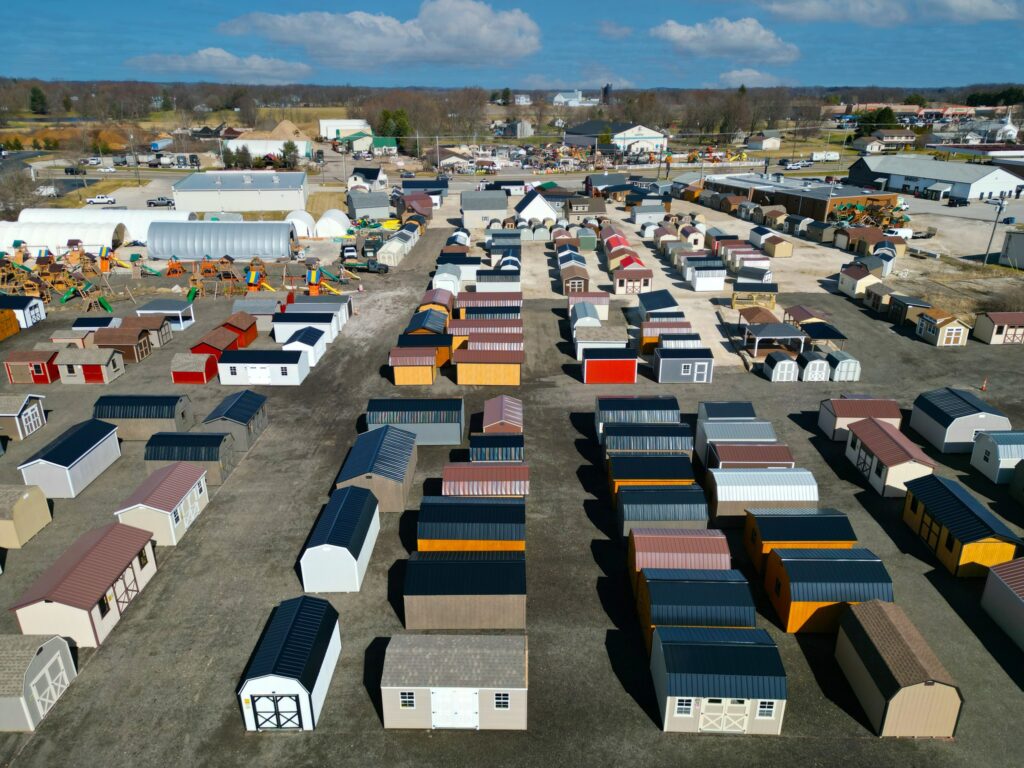
Walk around the entire building and inspect the siding, trim, doors, corners, and roof edges. Look for peeling paint, cracked caulk, loose boards, exposed fasteners, rust, mildew, or damaged sections. Make repairs before painting instead of covering problems with a fresh coat. If the shed itself is nearing the end of its useful life, compare repair costs with current storage sheds and barns from Hartville Outdoor Products before investing heavily in refinishing an extensively damaged structure.
A clean surface is essential when learning how to paint garden shed exteriors. Dirt, dust, pollen, mildew, cobwebs, and loose paint can prevent the new coating from bonding properly. Begin by brushing away loose debris, then wash the siding using a suitable cleaner for the material. Rinse thoroughly and allow the building to dry completely before moving to sanding, priming, or painting.
Do not paint damp siding simply because the surface feels dry to the touch. Moisture trapped in wood or behind loose paint can interfere with adhesion and shorten the life of the finish. The U.S. Environmental Protection Agency's guidance on exterior surface preparation recommends cleaning exterior wood, removing loose paint, preparing a sound surface, and then priming and painting. If you are working on an older painted structure, use appropriate precautions when disturbing existing coatings because sanding or scraping can create hazardous dust.
Remove Loose Paint And Prepare The Surface
Surface preparation often takes longer than painting, but it is a major part of how to paint garden shed surfaces successfully. Scrape away loose, flaking, or peeling paint with a suitable scraper. Sand rough transitions between old paint and exposed material so the finished surface looks smoother. For wood sheds, sand exposed areas as needed and remove sanding dust before applying primer. For metal sheds, remove loose rust with an appropriate wire brush or abrasive method.
Patch small holes, dents, or damaged areas with a repair product designed for the siding material. Replace badly deteriorated boards rather than trying to hide structural damage beneath paint. Caulk appropriate joints where water could enter, while leaving drainage and ventilation openings unobstructed. When people ask how to paint garden shed buildings and get a professional-looking result, careful preparation is usually the difference between a finish that looks clean and one that quickly shows defects.
Apply The Right Primer For The Shed
Primer helps create a suitable surface for the finish coat and can improve adhesion on bare or repaired areas. When planning how to paint garden shed walls made from wood, prime exposed wood, patched sections, and any areas recommended by the paint manufacturer. A completely bare wooden shed may benefit from a full primer coat before the exterior paint is applied.
Metal and vinyl require products specifically compatible with those materials. Do not assume a wood primer will work correctly on every surface. Rust-prone metal may require a corrosion-resistant primer after the rust has been properly removed. Previously painted siding in good condition may not always need a full new primer coat, depending on the existing finish and paint system. Read the coating manufacturer's instructions before starting because compatibility between the surface, primer, and topcoat is more important than following one universal formula.
Choose Exterior Paint And A Practical Color
Use exterior paint designed for the shed material and local weather exposure. Interior paint is not intended to handle the moisture, sunlight, and temperature changes that outdoor buildings experience. When choosing how to paint garden shed exteriors, consider not only color but also the manufacturer's recommended coverage, number of coats, application temperature, and drying time.
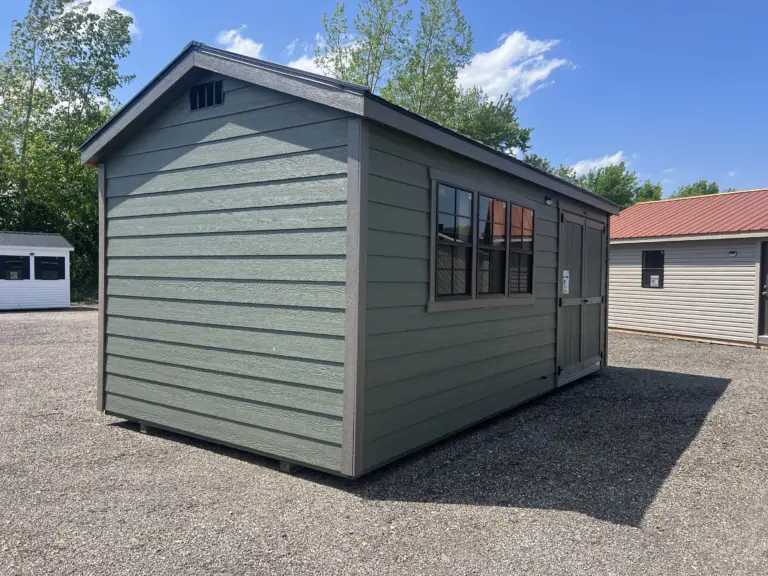
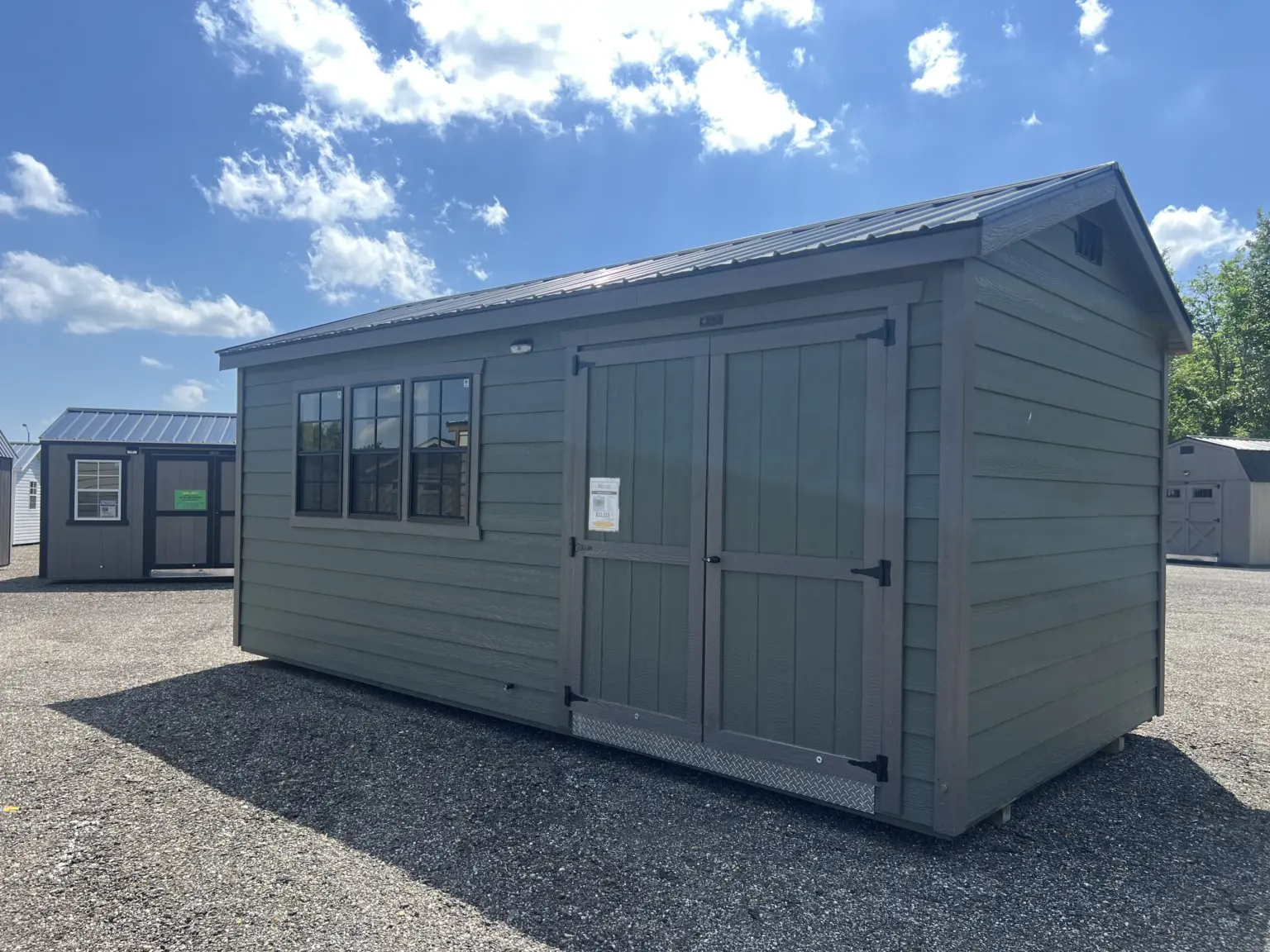
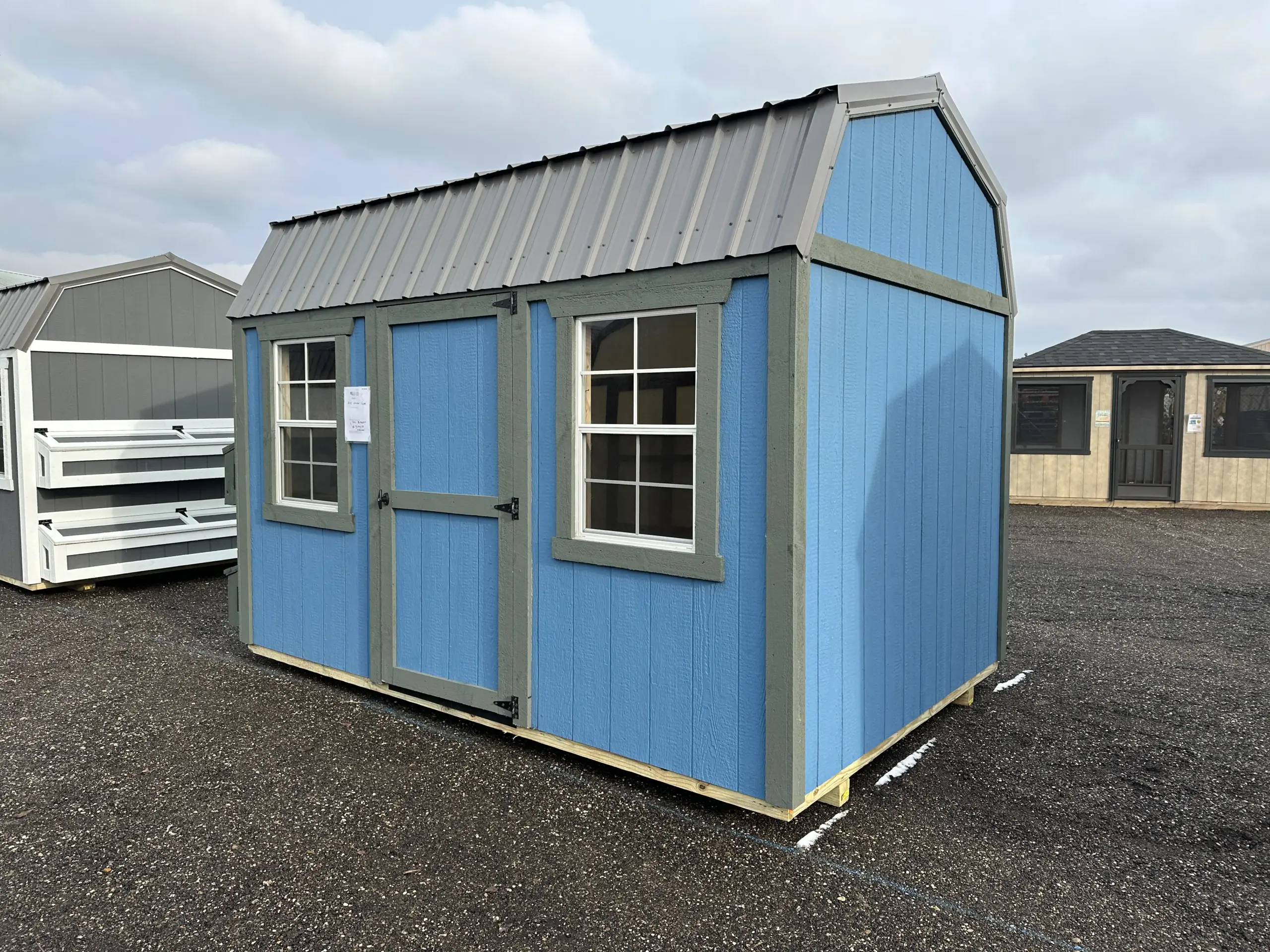
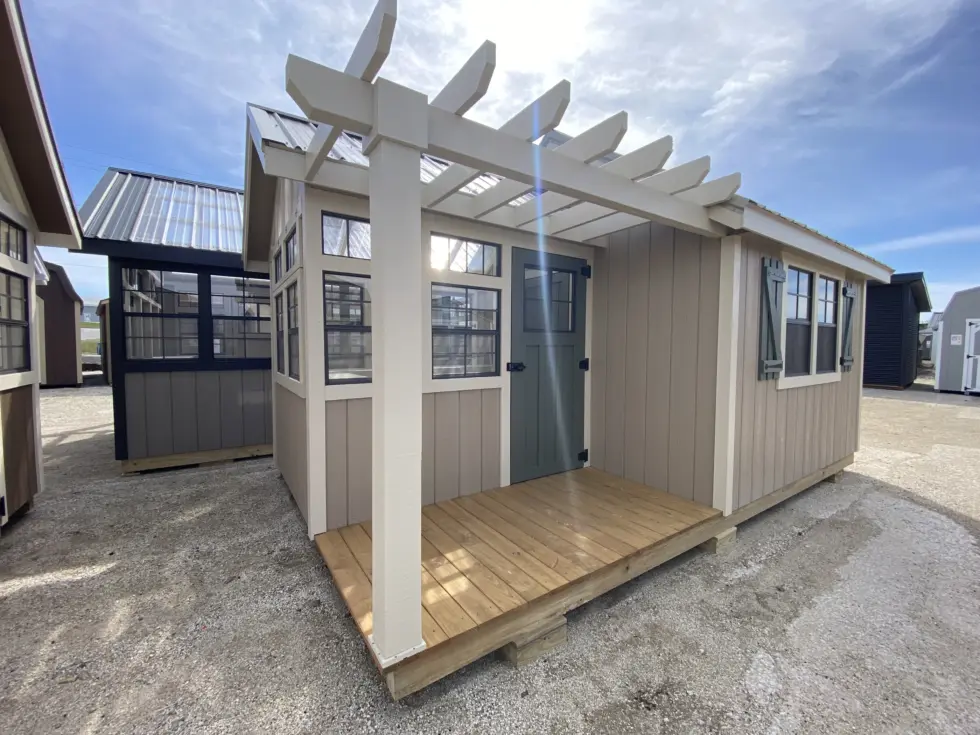
Color can connect the shed visually with the house, garage, fence, or landscaping. Neutral tones tend to blend easily with residential properties, while contrasting doors and trim can add character without making the entire structure visually dominant. If you are replacing or adding a building and want to compare exterior styles before deciding on colors, Hartville Outdoor Products offers in-stock storage sheds in a variety of siding, trim, roof, and building combinations. Looking at completed structures can make it easier to picture how different color relationships work outdoors.
Paint With Brushes And Rollers In Sections
Once the surface is prepared and primed, start painting from the upper sections and work downward. This makes it easier to control drips and maintain a consistent finish. A brush works well around trim, corners, doors, windows, and detailed areas, while a roller can cover larger flat sections efficiently. Depending on the siding profile, a brush may still be needed to work paint into grooves or textured areas.
When learning how to paint garden shed siding, avoid applying excessively thick coats in an attempt to finish faster. Follow the paint manufacturer's spreading rate and drying instructions. Two properly applied coats often produce a more consistent finish than one heavy coat when the product specifies multiple coats. Maintain a wet edge where possible so adjoining areas blend together. If the shed has separate trim colors, complete the main siding first, allow it to dry, and then carefully paint trim and doors.
Paint In Suitable Weather And Allow Proper Drying
Weather can affect how well exterior paint applies and cures. Avoid painting immediately after rain, during heavy humidity, or when rain is expected before the coating can dry. Temperature requirements vary by product, so use the range printed on the paint label instead of relying on one general rule. Direct hot sunlight can also make paint dry too quickly on the surface and become harder to apply evenly.
Timing is therefore an important part of how to paint garden shed exteriors. Start on a dry day with enough time for the coating to set before evening moisture develops. Work around the building according to sunlight when practical, rather than painting surfaces that are extremely hot. Allow each coat to dry for the recommended period before applying the next one. Rushing the drying process can cause tackiness, uneven coverage, or poor adhesion that becomes noticeable after the project is finished.
Maintain The Finish And Protect Your Garden Shed
Knowing how to paint garden shed surfaces also means knowing how to maintain the finish afterward. Inspect the exterior every year for peeling paint, exposed wood, cracked caulk, rust, or places where water repeatedly contacts the siding. Clean dirt and organic buildup before it becomes difficult to remove. Small touch-ups completed early can prevent a minor damaged area from turning into a much larger repainting project.
This guide covered how to paint garden shed surfaces from inspection and cleaning through preparation, priming, painting, drying, and long-term maintenance. A carefully prepared surface and exterior-grade coating can improve the appearance of the building while helping protect its siding from everyday weather exposure. If you are considering a new shed instead of refinishing an older one, Hartville Outdoor Products offers storage sheds, barns, garages, outdoor structures, furniture, and related products in a wide range of sizes and styles. Whether you are maintaining an existing building or choosing a new one, knowing how to paint garden shed exteriors properly helps keep your outdoor space looking finished and well cared for.